Introduction
Artificial intelligence is rapidly changing how businesses attract customers, manage operations, deliver services, and make decisions. However, many companies are using AI in isolated ways. They may have one chatbot on their website, an AI writing tool for marketing, or an automation that sends follow-up emails.
These tools can be useful, but they do not create a complete transformation.
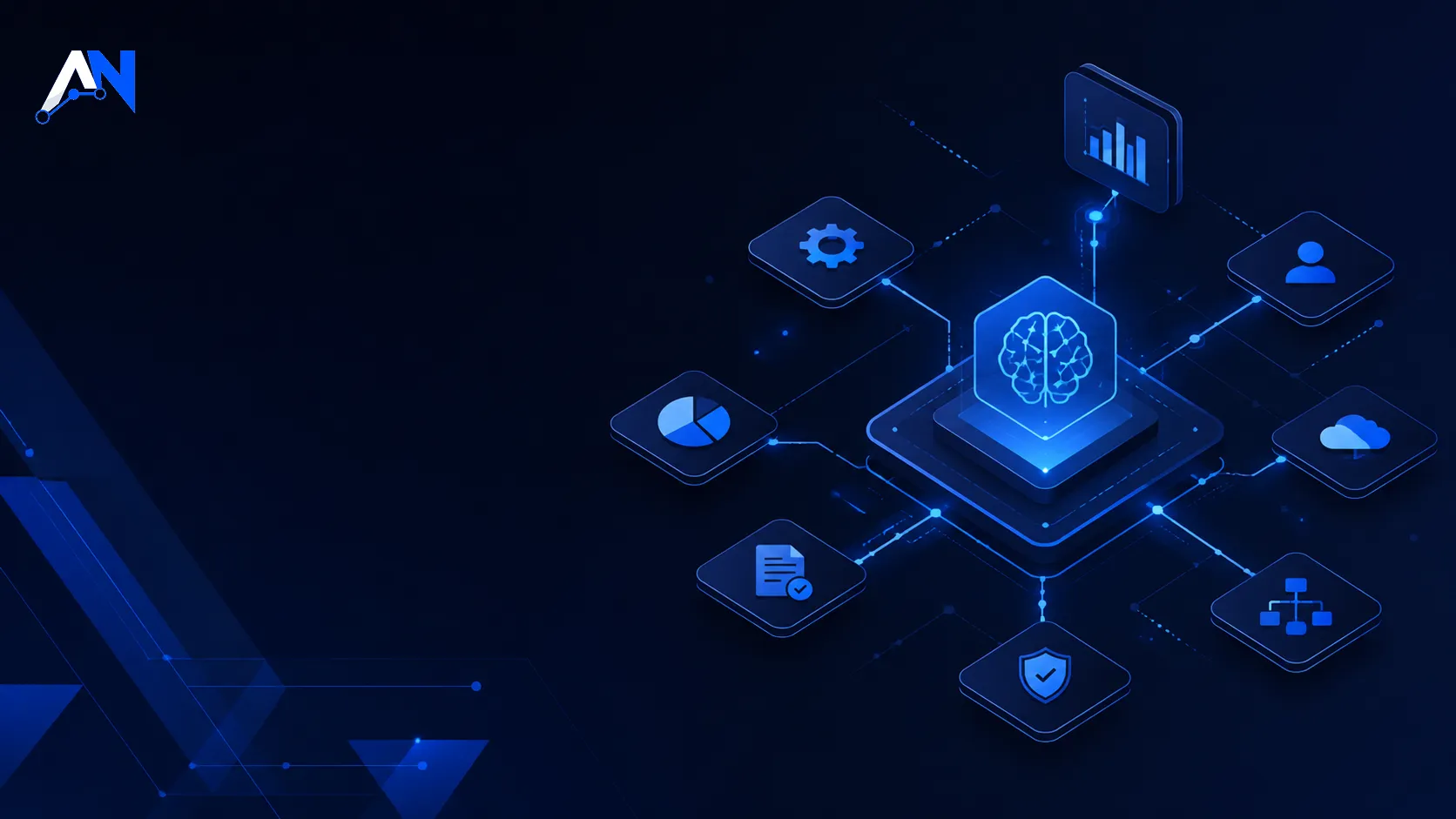
A Complete AI Business System connects AI, automation, data, and business processes into one coordinated system. Instead of using disconnected tools, the company builds an intelligent infrastructure that supports the entire customer journey and internal workflow.
The result is a business that responds faster, operates more efficiently, and delivers a better customer experience without constantly increasing its team size.
What Is a Complete AI Business System?
A Complete AI Business System is an integrated collection of AI-powered tools and automated workflows designed to improve every major area of a business.
The system can include:
- AI-powered lead generation
- Intelligent sales agents
- Automated customer support
- Personalized marketing
- CRM automation
- Internal workflow automation
- AI-powered reporting
- Customer data management
- Appointment scheduling
- Follow-up automation
- Performance analytics
The purpose is not simply to add more technology. The goal is to create a connected business environment where information moves automatically, repetitive tasks are handled by AI, and employees can focus on high-value work.
For example, when a potential customer fills out a website form, the system can automatically qualify the lead, add it to the CRM, send a personalized email, notify the sales team, schedule a follow-up, and track the outcome.
Without an integrated system, employees may need to perform every step manually.
The Difference Between AI Tools and an AI Business System
Many businesses already use AI tools, but individual tools often work independently.
A marketing team may use AI to write content. The sales team may use a different tool to manage leads. Customer support may operate through another platform, while management checks performance using spreadsheets.
This creates several problems:
- Customer data becomes scattered
- Teams repeat the same work
- Important leads are forgotten
- Reporting becomes inaccurate
- Customers receive inconsistent communication
- Employees spend time transferring information manually
A Complete AI Business System solves these problems by connecting tools, workflows, and data.
Instead of separate platforms working alone, each component communicates with the others. This creates a smoother experience for both customers and employees.
Core Components of a Complete AI Business System
1. AI-Powered Marketing
An AI marketing system helps businesses create, personalize, distribute, and optimize content.
It can support:
- Social media content
- Email campaigns
- Search engine optimization
- Customer segmentation
- Advertising campaigns
- Personalized product recommendations
- Lead magnets
- Marketing analytics
AI can analyze customer behavior and help businesses deliver the right message to the right person at the right time.
2. AI Sales Automation
An AI sales system manages leads from the moment they enter the business.
It can qualify prospects, answer common questions, recommend services, book meetings, and send follow-up messages.
Instead of waiting for a salesperson to respond, potential customers can receive assistance immediately.
This is especially valuable because leads often contact several companies at the same time. The business that responds first and provides the clearest information usually has a stronger chance of winning the customer.
3. Intelligent Customer Support
AI customer support agents can answer routine questions, provide order updates, explain services, and guide customers through common problems.
They can operate through:
- Website chat
- Facebook Messenger
- Mobile applications
When a question requires human judgment, the system can transfer the conversation to the appropriate team member with the full customer history attached.
4. Workflow Automation
Every business has repetitive administrative processes.
These may include:
- Updating spreadsheets
- Creating invoices
- Sending reminders
- Moving information between platforms
- Assigning tasks
- Preparing reports
- Confirming appointments
- Organizing customer records
Automation can handle these activities consistently and reduce the risk of human error.
5. AI Analytics and Reporting
Business owners often have access to large amounts of data but struggle to turn it into useful decisions.
An AI analytics system can combine information from marketing, sales, customer service, and operations. It can then identify patterns, highlight problems, and generate understandable reports.
For example, the system may identify that one marketing channel produces more qualified leads, a particular product receives repeated complaints, or customers are abandoning the buying process at a specific stage.
Benefits of a Complete AI Business System
Faster Response Times
Customers no longer need to wait several hours for a basic answer. AI agents can respond immediately and remain available outside normal working hours.
Reduced Operational Costs
Automation reduces the amount of manual work required to complete routine activities. This allows the business to grow without increasing costs at the same rate.
Better Customer Experience
Customers receive faster, more personalized, and more consistent communication across different channels.
Improved Productivity
Employees spend less time on repetitive tasks and more time solving complex problems, building relationships, and improving services.
More Reliable Follow-Ups
Automated reminders and follow-up sequences ensure that potential customers are not ignored or forgotten.
Better Decision-Making
Connected analytics give leadership a clearer view of what is working, where money is being wasted, and which areas need improvement.
Which Businesses Can Use an AI Business System?
A Complete AI Business System can be adapted for many industries, including:
- E-commerce
- Real estate
- Healthcare administration
- Professional services
- Marketing agencies
- Education
- Home services
- SaaS companies
- Recruitment
- Logistics
- Hospitality
- Financial services
The exact system depends on the company’s business model, customer journey, team structure, and existing technology.
An e-commerce company may focus on product recommendations, abandoned-cart recovery, and customer support. A service business may prioritize lead qualification, appointment booking, proposals, and follow-ups.
How to Get Started
The first step is not choosing an AI tool. The first step is understanding the business.
A successful implementation usually begins with a process audit. This identifies:
- Repetitive tasks
- Slow response points
- Lost leads
- Customer complaints
- Manual data entry
- Reporting problems
- Communication gaps
- Expensive processes
After identifying the highest-impact opportunities, the company can design a system that connects its website, CRM, communication channels, and internal workflows.
It is usually better to start with one or two high-value processes and expand gradually. This reduces risk and allows the business to measure results before making a larger investment.
For related guidance, explore how AI is transforming modern businesses, AI automation ideas for small businesses, how to build a successful AI strategy, and AI sales and customer support agents for e-commerce. Review AlphaNovix AI and digital services, or contact AlphaNovix to discuss a connected business system.
Conclusion
A Complete AI Business System is more than a chatbot or a collection of automation tools. It is a connected infrastructure that helps a company attract leads, convert customers, deliver support, manage operations, and make better decisions.
Businesses that build integrated AI systems can respond faster, reduce operational costs, and scale more efficiently. They can also provide the personalized experience customers increasingly expect.
The most successful AI systems are not built around technology alone. They are designed around clear business goals, reliable processes, and measurable results.
By combining AI strategy, automation, integrations, and continuous improvement, companies can create a smarter and more scalable way of working.