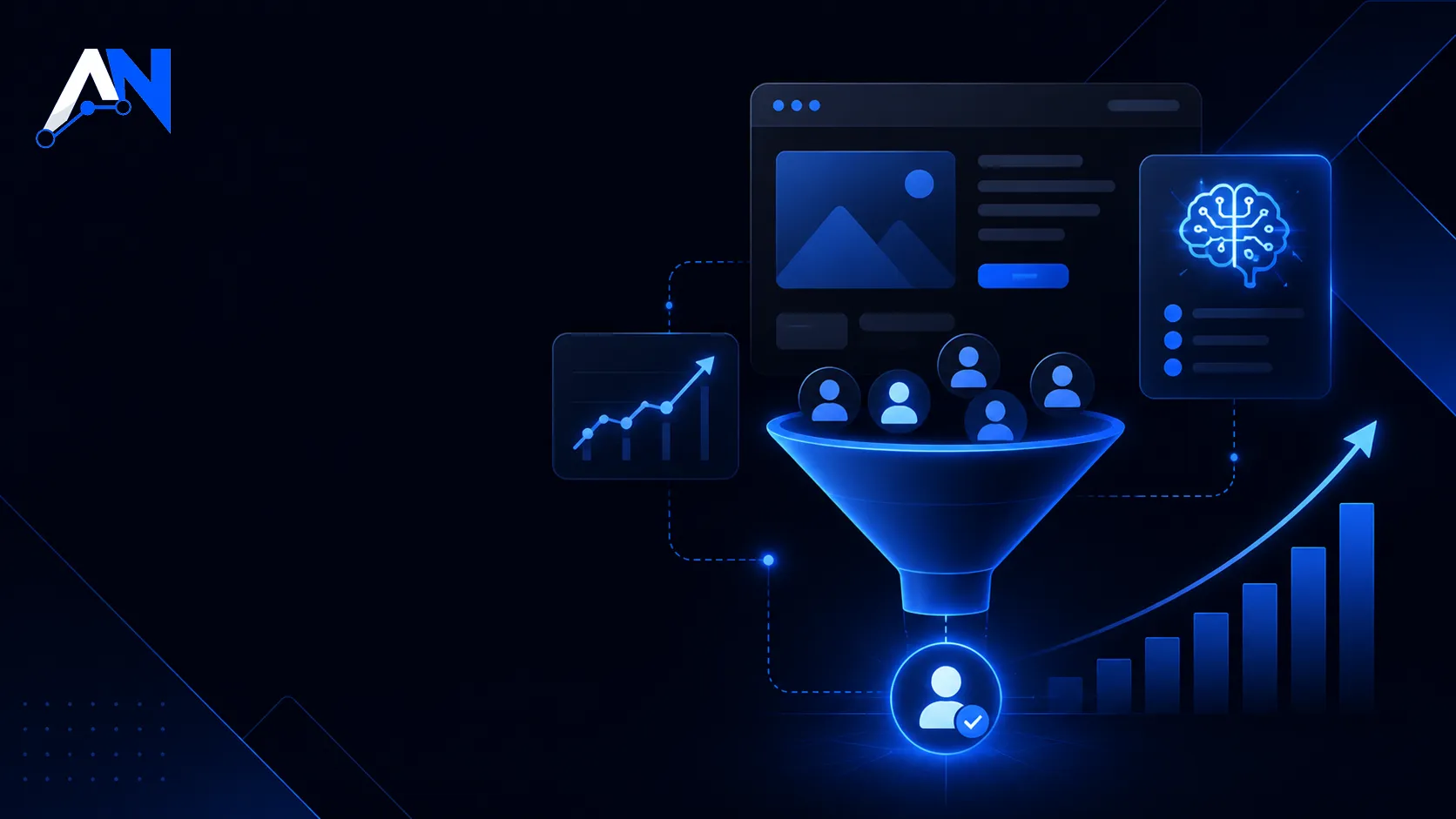
A traditional business website usually provides information and waits for visitors to take action. An AI-powered website can create a more interactive experience.
Instead of showing the same content to every visitor, it can answer questions, recommend services, personalize information, qualify leads, and guide users toward the next step.
This does not mean every website needs complicated technology. The purpose of AI should be to remove friction from the customer journey.
When implemented correctly, AI can help a website become an active sales and customer-service channel.
Why Website Visitors Do Not Convert
A visitor may arrive on a website after seeing an advertisement, finding the business through a search engine, or receiving a recommendation.
Even when the visitor is interested, several problems can prevent conversion.
The website may not clearly explain the offer. Pricing may be difficult to understand. The visitor may not know which service is suitable. Contact forms may ask for too much information. Responses may take several hours or days.
Some visitors leave because they are not ready to schedule a meeting. They may need answers before making a decision.
An AI-powered experience can address many of these problems immediately.
Instant Answers Through AI Chat
One of the most useful AI website features is conversational support.
An AI assistant can answer questions about services, products, availability, delivery, pricing, policies, and processes.
For example, a visitor on a web development agency website may ask whether the agency works with Shopify. The assistant can provide an immediate answer, explain the relevant service, share a case study, and offer to schedule a consultation.
The visitor receives help without searching through multiple pages.
The assistant should be trained using accurate company information. It should also avoid answering questions outside its approved knowledge.
When the system is uncertain, it should collect the visitor’s details or transfer the conversation to a human.
Guiding Visitors to the Right Service
Businesses often offer several services, packages, or products. Too many options can create confusion.
An AI recommendation system can ask a few questions and suggest the most suitable option.
A digital agency might ask about the visitor’s business type, project goals, budget, timeline, and current website. Based on the answers, it may recommend a landing page, a complete business website, or an e-commerce solution.
This reduces decision fatigue.
The recommendation should include a clear explanation. Customers are more likely to trust the result when they understand why a particular option has been suggested.
Personalizing Website Content
Different visitors have different priorities.
A startup founder may care about speed and cost. An established company may care about security, integrations, and scalability. An e-commerce owner may focus on conversion rates and order management.
AI can help personalize website content based on visitor behavior, traffic source, location, industry, or previous interactions.
A returning visitor may see information related to the service they viewed earlier. A visitor from an advertising campaign may see a landing page designed for that specific offer.
Personalization should remain helpful rather than intrusive. Businesses should respect privacy and avoid using personal information without appropriate consent.
Qualifying Leads Automatically
A website may generate many inquiries, but not all leads have the same level of potential.
AI can collect and organize lead information before the sales conversation.
The assistant may ask what the visitor wants to achieve, when they need the service, what system they currently use, and what budget range they have.
It can then categorize the lead based on predefined rules.
High-priority leads can receive an immediate booking option. Other leads may receive useful content, a pricing guide, or a follow-up email.
This process benefits both the customer and the sales team. Customers receive a relevant next step, while salespeople gain useful context before the meeting.
Reducing Abandoned Forms
Long contact forms often reduce conversion rates.
Visitors may not want to complete ten fields before knowing whether the business can help them.
A conversational AI form can make the process feel easier by asking one question at a time.
It can also change the next question based on the previous answer. A visitor who wants an e-commerce website may be asked about products and payments, while someone requesting SEO may be asked about traffic and target markets.
The interaction becomes shorter and more relevant.
Businesses should only collect information that is necessary. Requesting excessive data can reduce trust.
Supporting E-Commerce Customers
AI-powered features are especially useful for online stores.
A shopping assistant can help customers find products based on preferences, budget, size, features, or use case.
For example, a customer may ask for a laptop suitable for frontend development within a specific budget. The assistant can filter available products and explain the differences.
AI can also answer delivery questions, explain return policies, suggest complementary products, and help customers compare options.
This creates an experience similar to speaking with a helpful sales representative in a physical store.
However, the assistant must use accurate inventory, pricing, and policy information. Incorrect recommendations can create frustration and additional support work.
Recovering Potential Customers
Not every visitor converts during the first session.
AI-powered systems can identify high-intent actions such as viewing pricing repeatedly, spending time on service pages, or beginning a checkout process.
With appropriate consent, the business can follow up through email or advertising.
The message should relate to the visitor’s actual interest. A customer who viewed a specific service may receive a relevant case study instead of a general newsletter.
For e-commerce websites, abandoned-cart reminders can include the selected products and a direct return link.
Follow-up should be useful and limited. Aggressive messaging can damage the customer relationship.
Improving Through Analytics
AI can also help businesses understand how visitors use the website.
It may identify frequently asked questions, pages with high exit rates, common objections, and customer segments that convert more often.
For example, chatbot conversations may reveal that visitors do not understand the difference between two packages. The business can then improve the pricing page.
Analytics should not remain separate from action. The purpose of collecting information is to improve content, design, offers, and customer journeys.
Important Implementation Principles
An AI-powered website must still follow strong website fundamentals.
The design should be fast, responsive, accessible, and easy to navigate. The offer should be clear. Calls to action should be visible. Content should build trust.
AI cannot fix poor positioning or a confusing service.
Businesses must also protect customer information, review AI responses, and regularly update the knowledge base.
Human support should remain available for important decisions, complaints, and complex questions.
For related guidance, explore AI automation ideas for small businesses, AI sales and customer support agents, AI strategy for business, and AI’s impact on modern businesses. For hands-on implementation, review our AI services. Ready to discuss your goals? Contact AlphaNovix to plan the next step.
Conclusion
An AI-powered website can do more than display information. It can answer questions, personalize content, recommend services, qualify leads, support shoppers, and improve follow-up.
The strongest approach is to use AI where it reduces friction in the customer journey.
Businesses should begin with one clear feature, such as an AI website assistant or lead-qualification workflow. After measuring the results, they can gradually add more advanced capabilities.
When useful technology is combined with clear messaging and strong design, a website becomes a more effective tool for generating customers.